Strategic Growth · Net Worth
Why Net Worth Is Built Through Systems, Not Motivation
Motivation is a starting point. Structure is the engine. Here’s the shift that separates those quietly pulling ahead from those still running on willpower.

Every January, millions of people wake up with a plan. Track every penny. Stop eating out. Finally invest. For about eleven days, it works beautifully. Then life happens — and quietly, without drama, the plan collapses. Not because the person is weak. But because they were relying on the most unreliable resource available: motivation. This article is about the shift that changes everything.
Why Motivation Is the Wrong Foundation
Motivation is emotional. It is, by definition, temporary.
Neuroscience has been clear on this for decades. The brain’s dopamine system — the same system responsible for motivation — is wired for novelty, not repetition. A new goal triggers a dopamine spike. The anticipation of progress feels rewarding. But once the novelty fades, once the budget feels like a chore rather than an exciting project — the neurological reward disappears.

What replaces motivation? Friction. Resistance. The mental weight of having to decide every single day to stay disciplined. This is what behavioral economists call decision fatigue. Every day you consciously choose to do the right financial thing, you’re spending limited cognitive energy — energy that always runs out.
“Discipline without structure is just exhausting. And exhaustion, over time, always loses.”
This is not a character flaw. It is biology. And the answer is not to fight your biology. It is to design around it.
Signs You Are Running on Motivation Instead of Systems
- You restart your budget every few weeks after falling off track
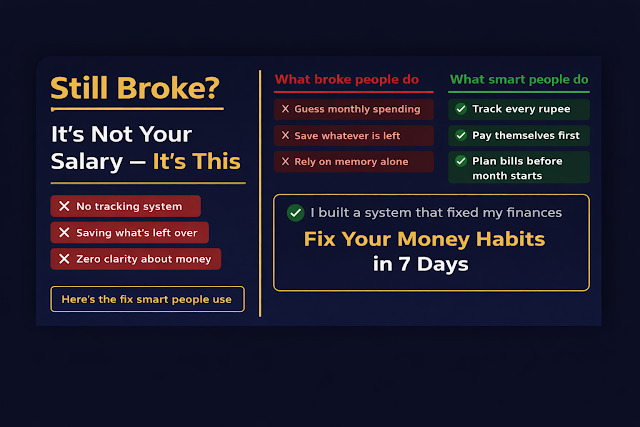
- You save “whatever is left” at the end of the month — which is often nothing
- Your financial progress depends on how you feel on any given week
- You make spending decisions based on a rough sense of “what feels okay”
- You’ve set the same financial goal multiple times across different years
What Systems Actually Do
A system is not a plan. A plan requires you to execute it manually, repeatedly, under full cognitive load. A system removes the requirement to decide.
Think about the most effective financial behaviors: automatic investment contributions. Standing orders for savings. Structured spending categories that eliminate the daily guesswork of “can I afford this?” These are not discipline. They are architecture.
Effort-Based Approach
You check your finances when you remember. Make spending decisions based on a rough sense of what’s okay. Save whatever is left at month-end. Invest when you feel confident.
Ask yourself: How motivated am I today?
Willpower-dependentSystems-Based Approach
Income is categorized automatically. Savings move before you see them. A clarity system shows your position in real time. Investment decisions follow a pre-set framework, not daily sentiment.
Ask yourself: What does my structure produce automatically?
Architecture-driven
Both people in the comparison above might have identical incomes. But in five years, their financial positions will be vastly different — not because one worked harder, but because one built an environment that produces results by design.
“You cannot out-discipline a broken environment. But a well-designed environment makes good results almost inevitable.”
Digital Leverage — The Advantage Previous Generations Didn’t Have
The systems conversation gets significantly more interesting when we add the dimension previous generations didn’t have access to: digital infrastructure.
We live in a leverage economy. For the first time in history, a single individual can build financial systems, income streams, and strategic assets that scale without proportional effort. This is leverage — and leverage, in every form, is a function of systems.
The individuals who are quietly pulling ahead are not necessarily working harder. They are working inside better systems. They have built — or accessed — digital infrastructure that creates leverage where others are still relying on effort.
This is not about technology for its own sake. It’s about understanding that structure multiplies execution. Without structure, even extraordinary talent produces inconsistent results. With structure, average inputs consistently produce above-average outcomes.
Financial Chaos Is More Expensive Than You Think
There is a direct, underappreciated cost to financial disorganization — and it goes far beyond overspending.
It’s the decisions you can’t make clearly because you don’t know your actual position. It’s the opportunities you miss because your financial baseline is unclear. It’s the mental bandwidth consumed by low-grade anxiety about money — bandwidth that could be directed toward growth, creativity, and strategic thinking.

Chaos creates a cognitive tax. When your finances are unclear, your decisions are reactive. You’re operating in survival mode even when your income doesn’t require it. And survival mode is the enemy of strategic thinking.
Visibility is the first act of control. You cannot optimize what you cannot see. The most damaging financial behaviors are rarely dramatic. They are quiet — the patterns that feel harmless individually but compound into thousands lost over a year.
The Strategic Individual — Who the Next Economy Rewards
We are entering an economic era that rewards a specific type of person.
Not the hardest worker. Not the most disciplined. Not the most motivated. But the most strategically positioned — those who have built systems, leverage, financial clarity, and digital infrastructure that compound over time.

The AI economy is accelerating this shift. Automation is eliminating premium compensation for routine effort. The value of raw time spent working is declining. The value of strategic thinking, creative leverage, and well-structured systems is increasing rapidly.
“The gap between those with financial systems and those without isn’t going to narrow. It’s going to accelerate.”
The good news: systems are learnable. Infrastructure is buildable. Clarity is achievable. The decision to shift from a motivation-based approach to a systems-based approach is available to anyone willing to think differently about how growth actually works.
The Three Things Strategic Individuals Build First
- Visibility — a clear, honest picture of their complete financial reality, not a rough sense of it
- Structure — a system that produces the right behaviors automatically, regardless of daily motivation levels
- Leverage — digital infrastructure and strategic positioning that makes every unit of effort compound over time
These three things are not personality traits. They are not gifts. They are design decisions — available to anyone who chooses to stop relying on willpower and start building architecture.
Frequently Asked Questions
What is the difference between motivation and a financial system?
Motivation is an emotional state that fluctuates with energy, mood, and circumstance. A financial system is a structure that produces consistent outcomes regardless of how you feel on a given day. Systems are reliable. Motivation is not — and over a long enough timeline, the difference becomes enormous.
I’m already earning well — why do I still need financial systems?
Income without structure doesn’t accumulate — it expands to fill available spending. High earners without financial systems often discover they’ve been at similar net worth levels for years despite strong income. Systems ensure money is being built, not just earned.
Where do I start if I want to build a financial system?
Start with visibility. You can’t build a system around something you cannot clearly see. A financial audit — mapping your income, spending patterns, and debt position — is the essential first step before any strategy can be applied effectively.
How does financial clarity improve decision-making?
When your financial position is clear, decisions become objective rather than emotional. You evaluate opportunities, risks, and investments from understanding rather than anxiety. Clarity reduces reactive decision-making and enables genuine strategic thinking.
Is this approach relevant if I’m just starting out financially?
Entirely — and the earlier you build financial systems, the more compounding time they have to work. The principles of structure, leverage, and clarity apply at any income level. Starting with systems now prevents years of motivation-dependent inconsistency later.
Financial Clarity Starts With Visibility
Before strategy, before optimization, before growth — you need to see exactly where you stand. The free Money Leak Audit surfaces hidden patterns, quiet drains, and structural gaps in your financial system.
Run Your Free Audit →