|
|
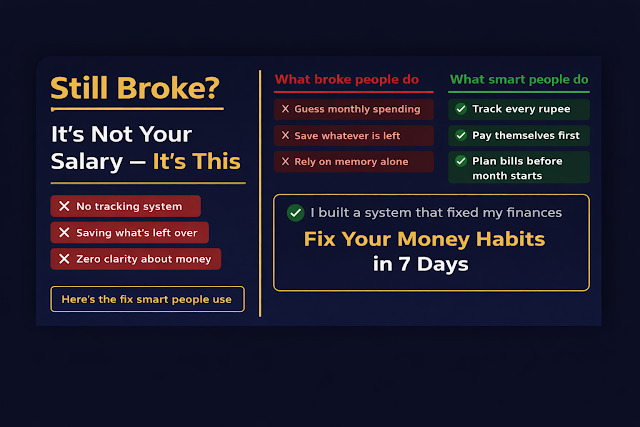
Financial discipline isn’t about earning more — it’s about building a system. Two people with the same income can end up with completely different lives. The difference comes down to habits, automation, and consistency. Start building your financial system today and take control of your future. |
Introduction: Two Lives. One Decision.
One Income. Two Divergent Futures.
Two professionals, earning identical salaries at the same age, can end up in two completely different worlds.
One builds a life of financial security and stability through automated systems and strategic debt management. The other remains trapped in a cycle of debt and anxiety, constantly reacting to financial emergencies.
The variable isn’t how much they earn. The variable is the system they use to manage what they earn.
✍️ Author’s Note: Financial discipline isn’t about willpower; it’s about architecture. It is the art of building a system that makes the right financial decisions automatic.
What Financial Discipline Actually Means
Most people think financial discipline means saying no to things. Living like a monk so you can theoretically enjoy life later.
That is financial punishment — and it never lasts.
Real financial discipline is knowing exactly where every money goes, having a system that makes the right money decisions automatically, and building the infrastructure that lets you say yes to what actually matters.
It has three components:
Awareness — knowing your income, expenses, debts, and net worth with precision.
System — automated rules that direct money correctly without requiring daily willpower.
Consistency — doing the same simple things every month, even when boring, even when markets are volatile.
The magic is in the combination. Awareness without a system produces anxiety. A system without awareness produces blind automation. Together, they produce compounding results that seem almost unfair.
The Two People — Person A vs Person B (In Full Detail)
Person A — The Person with a System
Person A earns Rs.55,000/month net. On the 1st of every month, before opening Instagram, he opens his offline finance tracker. It takes 8 minutes.
His 50/30/20 budget:
| Bucket | Amount | What It Covers |
|---|---|---|
| 50% Needs | Rs.27,500 | Rent Rs.12,000, groceries Rs.5,000, utilities Rs.2,000, insurance Rs.2,500, transport Rs.3,000, mobile Rs.500, misc. Rs.2,500 |
| 30% Wants | Rs.16,500 | Dining Rs.4,000, entertainment Rs.3,000, clothing Rs.3,000, trips Rs.4,000, personal care Rs.2,500 |
| 20% Savings | Rs.11,000 | SIP Rs.7,000, emergency fund Rs.2,000, home fund Rs.2,000 |
On the 1st, Rs.7,000 auto-transfers to his SIP. Rs.2,000 auto-transfers to his emergency fund. Rs.2,000 auto-transfers to his home down-payment fund.
He has zero consumer debt. His credit card earns him Rs.800-1,200/month in cashback — transferred to his goal fund.
His net worth tracker shows:
- SIP portfolio: Rs.4.2 lakh
- Emergency fund: Rs.1.8 lakh
- Goal fund: Rs.68,000
- Liabilities: Rs.0
- Net worth: Rs.6.68 lakh — growing Rs.85,000/month between contributions and growth
His goal tracker:
- Emergency fund: 90% complete (Rs.1.8 lakh of Rs.2 lakh target)
- Home down payment: 8.5% complete (Rs.68,000 of Rs.8 lakh — 3.5 years to go)
- Retirement SIP: Rs.4.2 lakh accumulated (on track for Rs.2.5 crore by 58)
Every Sunday, he spends 10 minutes reviewing last week’s spending. He adjusts the following week if he overspent in any category. He does not stress about money — because the system handles it. He just monitors the dashboard.
Person B— The Person Without a System
Person B also earns Rs.55,000/month. No budget, no tracker, no system. He manages money “intuitively” — spends until the account gets low, panics, cuts back, relaxes when salary arrives, repeats.
His reality:
By the 20th of every month, Person B account typically has Rs.4,000-8,000 left. He is not sure where the other Rs.47,000-51,000 went. Dining out — probably a lot. An impulse Amazon purchase. A subscription he forgot to cancel. A friend’s birthday dinner. A sale on a jacket he did not need.
He has a credit card with Rs.62,000 outstanding. He pays the minimum of Rs.2,400 each month. At 36% annual interest, this balance is growing faster than he reduces it. He does not fully understand this — he just knows it stresses him out.
He borrowed Rs.1.5 lakh as a personal loan 8 months ago for a Goa trip. EMI: Rs.3,200/month at 15.5% interest. He regrets it every time the debit hits.
His net worth (he never calculates it):
- Assets: Rs.12,000 savings account + Rs.45,000 PPF he started and forgot
- Liabilities: Rs.62,000 credit card + Rs.1.12 lakh personal loan = Rs.1.74 lakh
- Net worth: MINUS Rs.1.17 lakh
He is 28 years old with a negative net worth, no savings system, and constant financial anxiety. He knows something needs to change but does not know where to start.
💬 Opinion: Person B is not irresponsible. He is like the majority of people who were never taught a financial system and are trying to manage money with willpower and intuition — both of which run out. The problem is not his character. It is the absence of structure. Structure is what Person A has. Structure is what this system gives you.
Why a Simple System Makes Things 10x Faster
Without a system, Person B saves Rs.0/month — debt interest actively eats into his money.
With a system, Person A saves and invests Rs.11,000/month — automatically, without thinking about it.
The 10x multiplier compounds over time:
| Year | Person A (Rs.11,000/month @ 12% CAGR*) | Person B (Rs.0/month) |
|---|---|---|
| Year 1 | Rs.1.39 lakh | Rs.0 |
| Year 3 | Rs.4.9 lakh | Rs.0 |
| Year 5 | Rs.8.9 lakh | Rs.0 |
| Year 10 | Rs.25.3 lakh | Rs.0 |
| Year 20 | Rs.99.4 lakh | Rs.0 |
| Year 30 | Rs.3.52 crore | Rs.0 |
Illustrative estimates. Actual returns vary. Not guaranteed.
But the multiplier goes beyond money:
Removes decision fatigue. Every financial decision is pre-decided. No willpower needed monthly — the system decides.
Creates psychological safety. Person A knows he can spend all Rs.16,500 of his wants budget without guilt — the important things are already handled. Person B has no such clarity.
Catches problems early. When Person A overspends, the tracker shows it that week. Small problems stay small. Person B discovers problems when the credit card bill arrives — by then small problems have become large ones.
Builds momentum. Every month Person A updates his net worth tracker; the number goes up. Positive reinforcement makes him more committed over time, not less.
The 4-Part Financial Discipline System
Component 1 — The 50/30/20 Budget
The most widely used personal budgeting framework, for good reason: simple enough to actually follow.
50% → Needs (non-negotiable essentials)
Rent/EMI, groceries, utilities, essential transport, insurance, minimum debt repayments.
30% → Wants (discretionary lifestyle)
Dining, entertainment, subscriptions, shopping, travel. Track this ruthlessly.
20% → Savings and Assets
Emergency fund, SIP/investments, goal funds, extra debt repayment. Transfer on payday — before spending anything.
Real-world adjustments:
- High-cost city like Mumbai: 60/20/20
- High debt load: 50/15/35 (more to debt)
- Aggressive savings goal: 40/20/40
For Person A Rs.55,000:
The 50/30/20 means Rs.11,000 saved automatically every month — Rs.1.32 lakh in year 1, compounding to Rs.3.52 crore in 30 years.
Component 2 — The Debt Tracker
Debt is the biggest destroyer of financial discipline — not because debt is evil, but because untracked debt is invisible, and invisible debt grows.
The Debt Tracker captures:
- Name of debt
- Outstanding balance
- Interest rate
- Minimum monthly payment
- Target payoff date
- Progress bar (% paid off)
Why the interest rate column matters most:
Person B‘s Rs.62,000 credit card balance at 36% annual interest costs Rs.22,320 per year — Rs.1,860 per month going directly to the bank, producing nothing for him. He is paying Rs.1,860/month to own debt. Invisible without the tracker.
The Avalanche Payoff Plan for Person B:
List debts by rate, highest to lowest. Pay minimums on all. Direct every extra money to the highest-rate debt.
If Person B redirected Rs.5,000/month extra to debt:
- Credit card (36%) cleared in ~14 months
- Personal loan (15.5%) cleared by month ~22
- Debt-free at month 22 — then Rs.8,200/month freed to redirect to investments
Being debt-free converts a financial drain into a net-worth-building engine.
Component 3 — The Net Worth Tracker
Net Worth = Total Assets − Total Liabilities
Track it monthly. This is the only number that tells you if you are truly moving forward.
Person A‘s net worth growth:
| Month | Assets | Liabilities | Net Worth |
|---|---|---|---|
| Start | Rs.80,000 | Rs.0 | Rs.80,000 |
| Month 12 | Rs.2.1 lakh | Rs.0 | Rs.2.1 lakh |
| Month 24 | Rs.4.6 lakh | Rs.0 | Rs.4.6 lakh |
| Month 36 | Rs.8.2 lakh | Rs.0 | Rs.8.2 lakh |
Person B‘s trajectory if he builds the system now:
| Month | Assets | Liabilities | Net Worth |
|---|---|---|---|
| Month 0 (no system) | Rs.57,000 | Rs.1.74 lakh | -Rs.1.17 lakh |
| Month 12 (with system) | Rs.1.8 lakh | Rs.48,000 | +Rs.1.32 lakh |
| Month 24 (debt-free) | Rs.3.9 lakh | Rs.0 | +Rs.3.9 lakh |
| Month 36 | Rs.7.2 lakh | Rs.0 | +Rs.7.2 lakh |
Same income. A system. Rs.7.2 lakh positive net worth in 36 months.
Component 4 — Goal Tracker with Visual Progress Bars
Vague goals fail. Specific goals with visual tracking succeed.
Every goal need:
- Specific name (Emergency Fund, Home Down Payment, Car Fund)
- Target amount
- Monthly contribution
- Target date
- Visual progress bar (updating automatically each month)
Why the visual bar matters:
Research in behavioral finance shows visual progress tracking increases follow-through by 2-3x compared to numbers alone. Watching a bar fill up produces positive reinforcement that permanently builds the habit.
Person A‘s emergency fund bar at 90% is more motivating than any number in a spreadsheet. He can feel the finish line approaching.
Why Fully Offline Matters
Your financial data is the most sensitive data you own. It reveals income, spending patterns, debts, and vulnerabilities.
The dangers of online financial apps:
- Data breaches expose your account patterns
- Advertising algorithms use financial behavior to target you
- Apps change terms of service and monetize data differently
- Third-party integrations share data with unknown partners
A fully offline system:
- Lives on your device only
- No internet connection required
- No accounts to create
- No data ever leaves your device
- You control it completely
This is not paranoia. It is basic financial privacy hygiene.
🧠 My Take: The best financial system is the one you actually use consistently. Knowing your data never leaves your device removes the trust barrier entirely — which means one less reason to abandon the system. Privacy plus simplicity equals longevity.
The 5-Year Comparison — Where They End Up
Person A at 33 (5 years of discipline):
- Net worth: Rs.14-16 lakh
- Debt: Rs.0
- Emergency fund: Fully funded
- Home down payment: Rs.4.8 lakh accumulated — home purchase in 2 years
- Credit score: 780+
- Financial stress: Minimal — knows exactly where he stands at all times
- Life options: Can take career risks, change jobs, afford unexpected costs comfortably
Person B at 33 (5 years without discipline):
- Net worth: Approximately Rs.2-3 lakh at best, likely still carrying some debt
- Emergency fund: Not funded
- Home purchase: Not possible without parental contribution
- Financial stress: Ongoing — background anxiety has become normal
- Life options: Limited by financial fragility — cannot take risks, must accept whatever income is available
The gap is not Rs.14 lakh. It is the optionality that Rs.14 lakh creates. Person A makes life decisions based on what he wants. Person B makes life decisions based on what he can afford. That is the real cost.
Your Action Plan — Start Today
- Day 1 — Calculate your exact monthly take-home income.
- Day 2 — Apply 50/30/20. See where you actually stand.
- Day 3 — List every debt: name, balance, interest rate, minimum payment.
- Day 4 — Calculate your net worth for the first time. Write the number down.
- Day 5 — Set up automatic transfers on your payday.
- Day 6-7 — Set 3 specific financial goals with target amounts and dates.
Every month from Day 30 onward: 15-20 minutes to update, review, and adjust.
Less time than deciding what to watch on Netflix.
The system that can help you in your Financial Discipline
Same income. Completely different outcomes. You already know which side you’re on.👉 Take the free NLF audit Free, no sign-in required. An educational self-assessment, not a credit rating.
Bottom Line: Discipline Is Not Sacrifice. It Is Freedom.
The word “discipline” sounds restrictive. But real financial discipline produces the opposite.
It produces freedom — to spend the wants budget without guilt because everything important is handled. To change jobs without panic because the emergency fund is intact. To say no to bad opportunities because the cushion makes waiting possible.
Person A is not richer than Person B because he earns more or got lucky. He built a system five years ago and let it run. The system did the heavy lifting. He showed up for 15 minutes every month.
The system is now yours.
⚠️ Disclaimer: All figures are illustrative estimates. Investment returns at 12% CAGR are not guaranteed. Consult a SEBI-registered financial advisor before making financial decisions.
#financial discipline, #50/30/20 budget, #debt tracker, #net worth tracker, #personal finance #India, #net worth building, #financial goals, #offline #finance system